• About
  • End of Year ‘Best Of’ Lists
    • ‘Best Film’ Lists
      • Film – 2017
      • Film – 2016
      • Film – 2015
      • Film – 2014
      • Film – 2013
      • Film – 2012
      • Film – 2011
    • ‘Best TV’ Lists
      • TV – 2017
      • TV – 2016
      • TV – 2015
      • TV – 2014
      • TV – 2013
      • TV – 2012
      • TV – 2011
  • Archived TV Recaps & Reviews
    • Canadian TV
      • Being Erica
      • Between
      • Bitten
      • Lost Girl
      • Orphan Black

Queer.Horror.Movies

The curated portfolio of film journalist Joe Lipsett

  • Queer
    • Horror Queers
    • Inside/Out Film Festival
    • Queer TV
      • American Horror Story
      • In The Flesh
      • Lost Girl
      • Pose
      • Sense8
      • Transparent
  • Horror
    • He Said/She Said
    • Horror Film Festival Coverage
      • Boston Underground Film Festival
      • Fantasia Film Festival
      • Hexploitation Film Festival
      • Horror-on-Sea
      • MidWest Weirdfest
      • Spring of Horror
      • Toronto After Dark
    • Horror Film Reviews
      • He Said/She Said Film Reviews
    • Horror TV
      • American Horror Story
      • Ash vs Evil Dead
      • Into The Dark
      • iZombie
      • Kingdom
      • Penny Dreadful
      • Scream
      • The Outsider
    • Horror Writing For External Websites
  • Movies
    • Hazel & Katniss & Harry & Starr Podcast
    • Film Reviews
      • Christmas Films
    • Film Festivals
      • Toronto International Film Festival
  • Podcasts
    • Hazel & Katniss & Harry & Starr Podcast
    • Horror Queers
    • XOXO Horror Podcast
    • Guest Appearances
  • Live Appearances

‘In The Heart of The South’ Review – Inuit Thriller Explores Identity and Genre [TIFF 2026]

September 17, 2026 by Joe Lipsett Leave a Comment

Issues of performance, trauma, and envy intersect with questions about what it means to be (a good) Indigenous person (or Native) in In The Heart of The South (2026).

Writer/director Nyla Innuksuk’s film cleverly uses meta elements to interrogate, tease, and confront these notions in a film that appears to be the byproduct of its own narrative. 

Yura (Anna Lambe) is an up and coming Inuk performance artist whose latest interactive piece on the residential school system, Class of 1967, has gotten her a lot of press and attention. Yura was already something of a known entity because of her traumatic childhood back story, in which she and another girl were stranded out on the ice overnight. The next step, and ultimate goal – according to her agent (and every other “influential” character in the film) – is to make a feature movie, preferably something with a genre hook. 

Yura’s ambition and her complicated history are thrown into question with the reappearance of her childhood friend, Sesi (Zorga Qaunaq) – the other girl from her childhood story.

The two women are diametrically opposed: Yura is eloquent, political, and knows how to engage white settlers who rush to compliment her art (while simultaneously appropriating and fetishizing it). Meanwhile, Sesi is abrasive, crude, and unpolished; she’s not “the perfect Native” that donors, gallery owners, and movie producers want. But there’s also an unpractised authenticity about her that attracts people into her orbit; she’s less rehearsed than Yura, whose tightly wound persona threatens to unravel the longer Sesi stays.

Sesi’s reappearance after a long absence also disrupts Yura’s workflow at a key time. Sesi turns up just as Yura is given a tight deadline to produce her film’s outline. It’s a huge opportunity, but Charlotte (Tara Nicodemo) the woman who runs the studio The Quiet Loud, is adamant about her expectations, which includes a strong genre/horror elements as a selling hook.

The further In the Heart of the South progresses, the more evident it becomes that the film we’re watching is the result of Yura’s efforts, even as she becomes increasingly unreliable as a protagonist. The longer Sesi is around, the more Yura loses control of the narrative: not only does she suspect that Sesi is stealing her ideas to create her own opportunities; more and more questions arise about the truth of Yura’s backstory as a piece of potentially problematic fiction.

Since the audience is aligned with Yura, Innuksuk and cinematographer Ann Tipper reflect this uncertainty in the form of both visual and auditory dream/hallucination sequences, including one in which Sesi threatens to cut off Yura’s finger in the kitchen before the digit is collected by a wolf. 

It’s clear that Yura’s guilty conscience is colluding with her doubts and insecurities to undermine her career (and sanity) at a particularly vulnerable moment. While these kinds of narratives, in which the audience is meant to question if a female character is going insane, have become familiar over the last decade, intersecting those conventions with notions of authenticity around Inuit identity help In The Heart of the South stand out.*

*This feels like another meta element given that Lambe had a role on the late/great Trickster adaptation, a text that was notoriously plagued with controversy about (false) Indigenous identity and how white settlers insert themselves into other people’s stories.

It doesn’t hurt that the lead performance by Lambe is so committed. The North of North actress immerses herself in the role, embracing the prickly and sometimes unlikeable aspects of Yura’s identity, especially as she becomes more desperate to succeed and distinguish herself from her (often more successful) contemporaries. The interrogation of what it means to be Inuk and stay true to your identity while also attempting to be exactly what (well-meaning, but uncomfortably appropriative) white settlers with money want is incredibly compelling. A great example is the scene when Yura is first introduced to Charlotte and the woman rudely makes Yura wait as she writes an email. The room then quietly fills with silent women who sit in on the meeting, outnumbering Yura eight to one in a beat that plays out like a cross between a ceremonial sacrifice and a show of intimidation). 

At times the genre elements feel awkwardly shoehorned in, almost as if Innuksuk herself was forced to introduce horror trappings at the behest of producers in order to sell it. Regardless, the film’s meta commentary is fascinating and does pay-off when the film moves into a full blown mirror/doppelgänger climax when Yura and Sesi finally confront each other and the secrets of the past are brought violently into the present. 

It’s mostly satisfying, although the film is best in the uncomfortable and confronting moments when white allies are being not-so-subtly mocked and critiqued. It’s confronting to see yourself reflected back on screen and, considering the vast majority of the audience will likely not be Indigenous, the sharp sting of Innuksuk’s criticism is both valid, cutting, and necessary.

Can I say I’m a fan without sounding like I’ve missed the point or that I’m as bad as the settler assholes in the film? I’ll take the rick and champion In the Heart of the South as a Canadian film that is definitely worth checking out. 4/5


In the Heart of the South premiered at TIFF 2026. Release information TBD
Filed Under: Horror Film Reviews, Toronto International Film Festival Tagged With: Anna Lambe, In The Heart Of The South, Nyla Innuksuk, Tara Nicodemo, TIFF 2026, Zorga Qaunaq

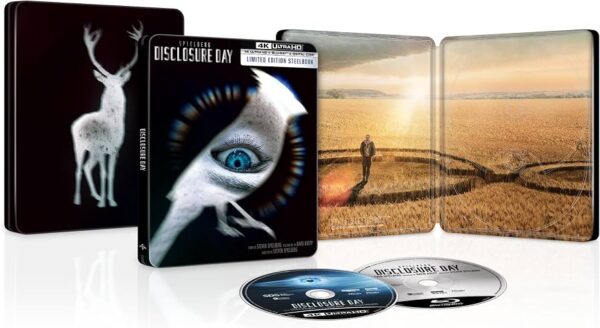
4K Review: ‘Disclosure Day’

August 28, 2026 by Joe Lipsett Leave a Comment

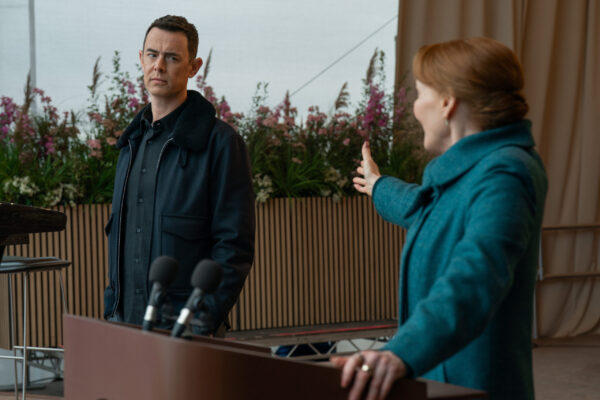
A mysterious vocal affliction performed live on the air by a meterologist. A nun who has lost her calling. A government employee with stolen artefacts. And the shadowy agency with limitless funds to track them down.

These are the characters populating director Steven Spielberg and screenwriter David Koepp‘s messy sci-fi title, Disclosure Day

[Read more…]

Filed Under: Physical Media Reviews Tagged With: Coleman Domingo, Colin Firth, Emily Blunt, Eve Hewson, Josh O'Connell

With “Farewell”, ‘Silo’ Blows Up The S03 Status Quo [Review w/ Gayly Dreadful]

August 28, 2026 by Joe Lipsett Leave a Comment

Each week Joe and Terry discuss Apple TV’s Silo Season 3, alternating between our respective sites. Spoilers follow for S03E09…

[Read more…]

Filed Under: Reviews w/ Gayly Dreadful, Silo, TV Tagged With: Alexandria Riley, Apple TV, ashley zuckerman, Colin Hanks, Common, Jessica Findlay, jessica henwick, Laura Innes, Matt Craven, Morven Christie, Rebecca Ferguson, Reed Birney, Tim Robbins

Silo S03E07 “Radio” Underwhelms With Another Lengthy Travel Episode [Review w/ Gayly Dreadful]

August 14, 2026 by Joe Lipsett

Each week Joe and Terry discuss Apple TV’s Silo Season 3, alternating between our respective sites. 

Spoilers follow for S03E07…

[Read more…]

Filed Under: Reviews w/ Gayly Dreadful, Silo, TV Tagged With: Alexandria Riley, Apple TV, ashley zuckerman, Avi Nash, Chinaza Uche, Colin Hanks, Common, Jessica Brown Findlay, jessica henwick, Laura Innes, Matt Craven, Morven Christie, Ned Dennehy, Rebecca Ferguson, Reed Barney, Rick Gomez, Shane McRae, Silo, Tim Robbins

‘The End of Oak Street’ Review – Dino Fun Occasionally Marred By Uneven Tone

August 13, 2026 by Joe Lipsett

A birds eye view of a suburban street cleaved abruptly into a pre-historic dinosaur environment

Merging Marriage Story with Jurassic Park sounds like a recipe for disaster, but writer/director David Robert Mitchell (It Follows) mostly manages to make The End of Oak Street work.

[Read more…]

Filed Under: Horror Film Reviews Tagged With: Anne Hathaway, bad robot, Christian Convery, David Robert Mitchell, dinosaurs, Ewan McGregor, Maisy Stella, the end of oak street

Ryan Murphy’s ‘The Shards’ Review – No Substance, Just Coke and 1980s Needle Drops

August 5, 2026 by Joe Lipsett

Bret Easton Ellis is a notoriously difficult author to adapt. While American Psycho is an uncontested masterpiece, film adaptations of his novels Less Than Zero and The Rules of Attraction were met with mixed critical reception and poor financial returns. Leave it to uber-producer/writer/director Ryan Murphy, then, to try and serialize Ellis in TV form with FX’s The Shards.

[Read more…]

Filed Under: Queer TV, TV Tagged With: Bret Easton Ellis, Ryan Murphy, The Shards

Silo’s Disparate Pieces Start To Come Together [S03E05 Review w/ Gayly Dreadful]

July 31, 2026 by Joe Lipsett

Each week Joe and Terry discuss Apple TV’s Silo Season 3, alternating between our respective sites. 

Spoilers follow for S03E05, “Memory”

[Read more…]

Filed Under: Reviews w/ Gayly Dreadful, Silo, TV - Current Coverage Tagged With: Alexandria Riley, Apple TV, ashley zuckerman, Chinaza Uche, Clare Perkins, Common, Harriet Walter, jessica henwick, Rebecca Ferguson, Remmie Milner, Shane McRae, Silo, Tim Robbins

‘Stranger Things’: The Complete Series Box Set Review

July 29, 2026 by Joe Lipsett

Over five seasons, The Duffer Brothers created one of the most significant contemporary sci-fi series with Stranger Things. Fuelled by a love of science fiction and horror titles and steeped in nostalgia, the series focused on a group of friends who become immersed in a shadow world called the Upside Down where a villain named Vecna eventually revealed themselves as the Big Bad.

The series reignited Winona Ryder‘s career and made celebrities of Millie Bobby Brown, David Harbour, Sadie Sink, Joe Keery, and Finn Wolfhard, among others. The theme song by electronic band Survive instantly became recognizable, and made everything 80s – from malls to Dungeons and Dragons – seem at once retro and totally cool again.

The Duffer Brothers have a long standing relationship, but apparently wanted to ensure the sustainability of their flagship series, which is why the entire series is now available in a massive 25 disc physical boxset from Arrow Videos.

And folks, it is gorgeous! Featuring brand new wraparound box art by Juan Ramos (stunning), the set is immaculately curated, with 25 art cards from across all five seasons, five double sided posters by Kyle Lambert, and a complete map of Hawkins, and even fun collectible items like a Hellfire d20 dice and patch.

There’s also the usual cast and crew interviews, blooper reels, set tours, and behind-the-scenes interviews

Most importantly, all 42 episodes are available in high definition with subtitles, ensuring that even if Netflix stops licensing the series (as they have been known to do, even with their own original content!), fans of the series don’t have to worry about losing access to the show. Overall the package looks incredible and, while the price tag isn’t cheap, considering how expansive the extras are, the set is pretty essential.

Per the Arrow website:

Experience the mystery and adventure of Hawkins like never before with the first ever physical release of the complete Stranger Things collection at Arrow Video! We’re thrilled to present all five seasons of the iconic series that stole hearts and minds globally featuring brand new artwork, countless hours of bonus features, a 148-page perfect-bound artbook including original design sketches, concept art, storyboards and new writing on the making of the series from the Duffer Brothers, Shawn Levy, Andrew Stanton, Kyle Dixon & more, plus memorabilia from across the Stranger Things universe.


Stranger Things: The Complete Series is now available for purchase in both Blu Ray and 4K editions

Filed Under: Physical Media Reviews Tagged With: arrow video, David Harbour, Finn Wolfhard, joe keery, millie bobby brown, Netflix, sadie sink, stranger things, Winona Ryder

‘Corpus’ Review – An Audacious and Erotic Look At A Toxic Gay Relationship [Fantasia 2026]

July 28, 2026 by Joe Lipsett

A hazy golden/orange image of a handsome dark haired man in a leather jacket and white shirt standing in a nightclub

Some films have a temperature associated with their colour scheme. Cool blues, disaffected greys, and earthy greens.

Corpus, writer/director Corrin Evans‘ 90s-set hallucinatory erotic thriller (but not in that way) is full of golden ambers and harsh oranges. It’s a film that feels sweaty and hot; the characters flit between rooms and scenarios in a daze – be it from the booze, the drugs, or good old fashioned lust (or some combination of all of the above).

Sayo (Jeff Wahlberg) is a low-level coke dealer and aspiring photographer living in New York. It’s late June, 1997 and Sayo is aimlessly passing through life, shooting anything that captures his eye on the street or at the gay bar. It’s quickly made clear by his vaguely misogynist friend Ross (Michael Vlamis) that the photographer is on the outs with their mutual friend Vince (Brodie Townsend), an up and coming celebrity whose chiseled jaw and cheekbones are prominently displayed on the cover of a magazine.

The tortured relationship between Sayo and Vince is the core of the film, and will feel relatable to any queer person crushing on someone in the closet or, more broadly speaking, a hook up that refuses to acknowledge you in the cold light of day as anything other than “a friend.”

The reality is that there is something going between Sayo and Vince (the sexual chemistry leaps off the screen whenever they’re together) and it’s evident that Vince can’t handle it because of his burgeoning fame. But he also can’t let Sayo go or stop leading him on, crashing in his bed after a night out partying and demanding Sayo accompany him – for professional reasons, of course – to a party hosted by influential photographer Billie (Lily Cowles) that weekend.

Of course, by the time Vince extends the invite, Corpus has already thrown up a number of red flags. The film’s cold open introduces Billie shooting a demure young woman, Wren (Nuha Jes Izman), in a photo shoot that quickly escalates into an uncomfortable, sexual assault-coded experience. When Vince, Sayo, and Ross arrive for the party, they discover an isolated, derelict country mansion located hours outside of the city. And there’s something odd about Billie, her older “friend” Cata (Ching Valdes-Aran) and a now feral Wren. In fact, none of them seemed to know Sayo or Ross were even coming.

Corpus spends the rest of its runtime teasing a series of weird and wild interactions that would send any reasonable person running back to the city. It’s here that Sayo’s push/pull relationship with Vince comes into play: despite all of the odd behaviour, including Wren murdering a chicken in front of their eyes, which is then served raw for dinner, Sayo can’t bear to stray from Vince, who continually leads the photographer on with his toxic, gaslighting behaviour.

Sayo could be a frustrating character if his relationship with Vince weren’t so well established. Despite how obvious it is that Vince is bad for him, it’s hard not to root for the two men to get together. Evans, who co-wrote the script with Crowes, weaves elements of gaslighting, obsession, and toxicity into Sayo and Vince’s interactions, which are frequently presented in tight, intimate shots or framed fetishistically by emphasizing individual body parts such as lips and eyes, or fingers grazing over bare skin.

It’s undeniably hot, even if it feels as though Vince, the script and the camera are edging Sayo (and, by extension, the audience) with the promise of sex. To be clear: there is man-on-man contact in Corpus, but even when Vince acquiesces to kiss Sayo, or touch his crotch, or go even further, it is almost inevitably accompanied by feelings of guilt, resentment, or vague disgust. These intimate encounters come off as simultaneously wrong and incredibly right; they’re emblematic of the internal conflict between what Sayo wants and what he knows he should refuse for his own emotional well-being.

So, too, is the depiction of their physical connection, which walks a carefully negotiated line thanks to Evans’ history working as an intimacy coordinator. The rollercoaster of emotions that accompanies the hot and heavy (verging on non-consensual) scene between the boys in a blood-red dark room late in the film is a perfect encapsulation of the fine line Corpus is walking.

Of course, Sayo’s attraction to Vince is not the only danger lurking in the castle, something that the film never tries to hide. Still, it is surprisingly how much mileage the film gets from teasing out how uncomfortable and odd the social situations involving Billie, Cata, and Wren are. The threat of (often sexually coded) violence is constantly bubbling under the surface.

That threat is most clearly embodied in a singular, evocative instrument: a distinctive mask/headpiece designed by Miodrag Guberinic of Mio Design NYC that is worn over a character’s head and prominently features a vertical shaft that ends in a multi-pronged fist of spikes. Introduced in the cold open, the mask is prominently displayed like a piece of art in Billie’s home before it is brought to the forefront for an unexpected purpose in the last act, accompanied by some truly incredible looking practical effects.

To say more would be to give away Corpus‘ secrets and this is a film that deserves to be feasted upon. Boasting a dirty, sweaty fashion shoot visual aesthetic and a central queer relationship that is undeniably erotic yet toxic, Corpus is surprising, audacious, and just the right amount of perverted. 4.5/5


Corpus made its world premiere at the 2026 Fantasia International Film Festival

Filed Under: Fantasia Film Festival, Horror Film Reviews Tagged With: Brodie Townsend, Ching Valdes-Aran, corpus, Corrin Evans, Fantasia 2026, Jeff Wahlberg, LGBT, LGBTQ, Lily Crowes, Nuha Jes Izman, Queer Horror

‘Godhead’ Review – Religious Home Invasion Film Is Equal Parts Frustrating and Enthralling [Fantasia 2026]

July 22, 2026 by Joe Lipsett

A high angle shot in black and white of a woman with her face turned up to the camera in religious ecstasy

The premise of Godhead, the latest from writer/director Mark H. Rapaport (Hippo), is fascinating: a pair of fraternal twins arrive at an empty church and demand that the Father (Al Warren) identify, then kill whichever one of them is the Holy Spirit.

As a concept, this is filled with potential. Not only for the religious dilemma of a man of the cloth being made to murder someone, but as a twist on the traditional home invasion subgenre, wherein unhinged individuals whose actions can’t be predicted force themselves into a sanctified environment. Add to this the fact that Father isn’t everything he appears to be, and there’s plenty of simmering tension and conflict to go around.

The problem is that Rapaport’s script never fully capitalizes on its potential, instead settling into countless heady conversations that feel more indebted to his prose than contributing meaningfully to the narrative.

A black and white image of a dark haired woman (left) and a man with bleached blond hair (right) in identical white track suits standing in a church

It’s a shame because there’s plenty to recommend about the film: first and foremost the performances by the actors playing the twins. The pair are never named (as they explain, they don’t believe in Christian traditions), so they’re only known as Firstborn (Sarah Coffey) and Secondborn (Kimball Farley, reuniting with his Hippo collaborator).

Coffey is the clear standout of the two, principally because she has vastly more dialogue than her nearly mute brother. She handles Rapaport’s dialogue best, infusing the character’s religious-tinged sentiments with a combination of disdain, simmering aggression, and piety. It’s a captivating performance, especially the charged encounter she shares with Father in his car as Firstborn reveals what she knows of his past and how events have been engineered to guarantee their encounter.

Farley is, by necessity, quieter and more introspective (the character’s backstory suggests that he is minorly developmentally delayed because Firstborn temporarily asphyxiated him in the womb), but the kinder, gentler of the twins swings like a pendulum between naïve innocent and violent enforcer. Farley and Coffey play off each other well and the sibling connection, as well as their religious mania, is exceedingly believable.

Warren has the most difficult role because Farley is partially the audience’s proxy so the character spends a lot of his time poking holes in the twins’ story (the vast majority of the film is posed as a theological debate about whether the twins are telling the truth). Intriguingly, Father himself is no saint: he is introduced from the outset as a liar who has been raising a pre-teen son (an under utilized Luke Speakman) in secret after discovering the baby on the church’s doorstep. As a result, the boy, Michael, has never been allowed outside, lied to by Father that the outside world is unsafe and plagued by end of days-style catastrophes.

A black and white image of a bald man in glasses making the "shhh" motion by pressing his finger to his lips

This complicated backstory alone should make Father extremely compelling, but by hinging the narrative on his disbelief, Godhead tends to run in circles or avoid its most intriguing aspects. Rather than get to the bottom of Firstborn and Secondborn’s claims, Father tends to spend his time attempting to debunk them as liars or simply escape. One crucial early scene all but confirms the reality of what is happening, but Father handwaves it away.

The result is a number of lengthy back and forth conversations between him and Firstborn (and, to a lesser extent, Secondborn) that revisit variations of the same content again and again. The performances carry these scenes, but it sometimes seems as if Rapaport is needlessly delaying the film’s reveal rather than allowing the film to unfold organically.

Caveat: it’s entirely possible that these sequences will play better for individuals with a stronger religious background or faith.

Despite this, the film is eminently watchable. While the action is mostly restricted to a single location – the church – Rapaport ensures that the film is never stagnant. He and cinematographer William Babcock regularly vary the shot composition and keep the camera moving and the inky black and white color palette plays into the film’s moral dilemma (admittedly, Godhead’s visual aesthetic and thematic interests made it was difficult not to compare the film with Mark O’Brien’s similar, but more narratively satisfying The Righteous).

Ultimately Godhead is a challenging film to fully recommend. Its scripting issues are frustrating and make the film feel both longer and more drawn out than its 99 minute runtime. And yet, the undeniably well-made film features two compelling performances by the twins and the mise-en-scène is sumptuous. All in all, Godhead is a half-way there kind of production. 2.5/5


Godhead had its world premiere at the 2026 Fantasia International Film Festival

Filed Under: Fantasia Film Festival, Horror, Horror Film Reviews Tagged With: Al Warren, Fantasia 2026, Kimball Farley, Luke Speakman, Mark H. Rapaport, Sarah Coffey, William Babcock

  • 1
  • 2
  • 3
  • …
  • 276
  • Next Page »

The 411 on me

I am a freelance film and television journalist based in Toronto, Canada.

Words:
> Bloody Disgusting
> /Film
> Consequence
> The Spool
> Anatomy of a Scream
> Grim Journal
> That Shelf

Podcasts:
> Horror Queers
> Hazel & Katniss & Harry & Starr

Recent Posts

  • ‘In The Heart of The South’ Review – Inuit Thriller Explores Identity and Genre [TIFF 2026]
  • 4K Review: ‘Disclosure Day’
  • With “Farewell”, ‘Silo’ Blows Up The S03 Status Quo [Review w/ Gayly Dreadful]

Copyright © 2026 · Metro Pro Theme on Genesis Framework · WordPress · Log in