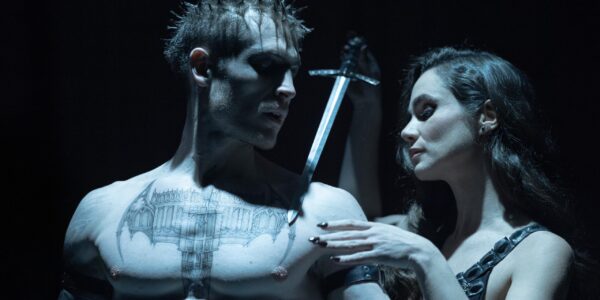
Carnivals are an untapped location in horror films, which is surprising given the potential for all kinds of creepy, insidious situations and characters. Vampire Carnival aims to play on those conventions.
David Charbonier and Justin Douglas Powell, the duo behind The Boy Behind The Door, aim to change that with their latest film, Vampire Carnival, which delivers pretty much exactly what the title promises.
Following the compulsory traumatic cold open wherein twenty-something Gemma (Nell Verlaque) makes a startling (unseen to us) discovery, some perfunctory voice over accompanies a brief montage that jumps the action ahead a year*
*This is approximate since the film deliberately avoids specifying both time and location (there isn’t even a time card to indicate how much time has passed). Sometimes this lack of information is frustrating; at other times, it helps to lend the film a kind of dreamy, liminal feel that reinforces both Gemma’s arc, as well as the way the vampires operate.
Following the opening, Gemma has withdrawn from the world, much to the chagrin of her supportive, albeit frustrated friends, Olivia (Paulina Chávez) and Ryan (Corrado Martini). After finally coraling her to come out with them, Ryan and Olivia bring Gemma to the touring attraction, though hopes for a fun reunion are dashed almost immediately when they run into Gemma’s ex, Eric (Kieron Moore), who works at Carnivale Gothique as a performer.
Dialogue hints that Eric became a stalker and a restraining order was involved in the break-up, which is why the young man is warned to keep his distance by police officer Hart (Cedrick Cooper), who is on patrol on the grounds.
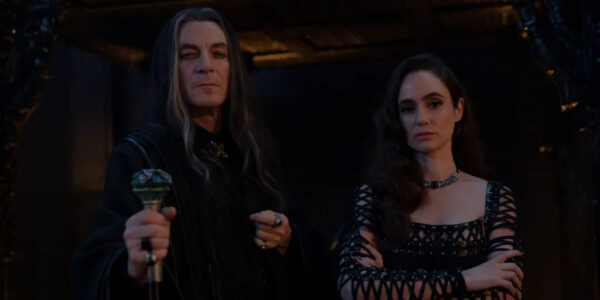
There are two other meaningful characters at play in the film. An early encounter occurs between carnival leader Toussaint (Jason Isaacs) and Gemma when he calls on her as part of his opening act. In a haunting moment that physically recreates elements of the opening trauma for the girl, Toussaint notes the depths of her pain and grief with interest.
By this time Gemma has also makes a sexy connection with beefy employee Sebastian (Alvise Rigo), who keeps an eye on her as the evening progresses. Whether his intentions are pure or full of bloodlust, however, is unclear.
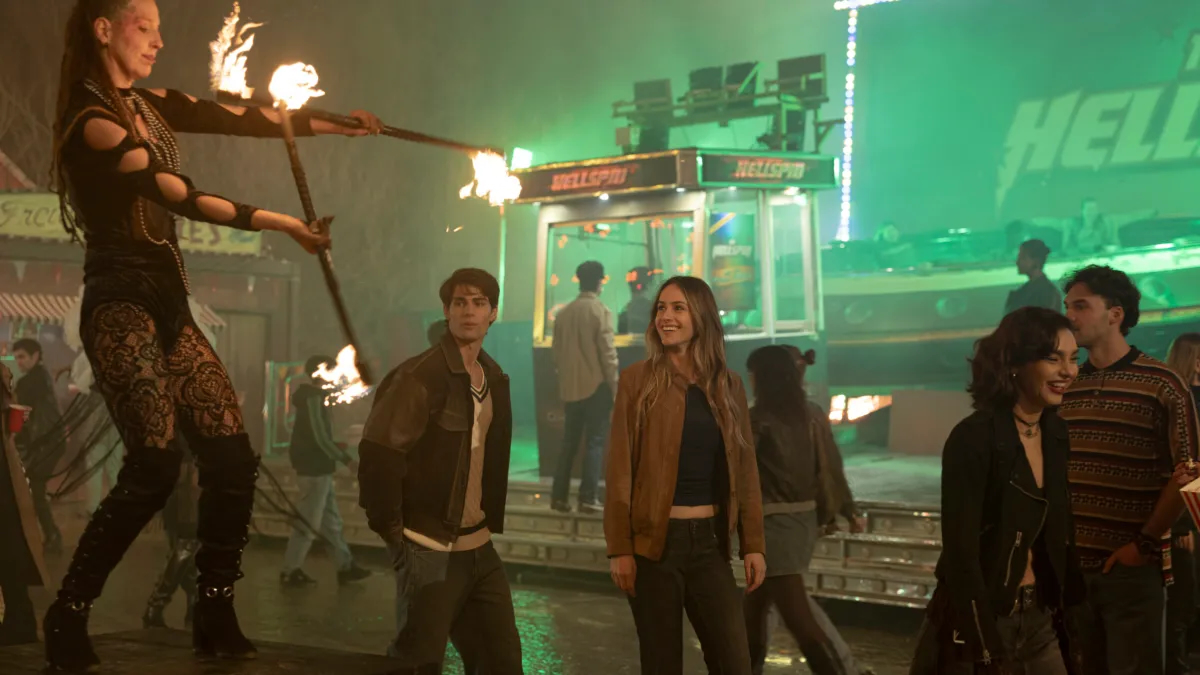
What’s strange about the film is how it does and does not embrace the reality of its title. It’s evident from the get go that the carnival employees are all vampires, though the screenplay from Jason and Peter Filardi holds out on the reveal until well into the film. At this point, Vampire Carnival recontextualizes how the vamps work and what their motivation is; in so doing, Eric is promoted to the role of principal antagonist as the movie zeroes in on his toxic relationship with Gemma as a core interest.
None of this is bad, though it occasionally feels as if the film is at war with itself. Gemma’s past – both the one involving her parents, father Michael (Eoin Macken) and mother Angela (Elizabeth Sanjuán), as well as her time with Eric, coalesce into something meaningful and surprisingly emotional in the bloody climax, but Eric’s heel turn and the body count to get there doesn’t always feel earned.
Thankfully Charbonier and Powell know how to deliver the goods from a technical point of view. The film, which was shot in Navarre, Spain, uses its large, practical sets to great effect and the directors easily create a creepy atmosphere. One sequence late in the film, set within a domestic space, features a brutal moment of violence that confirms that while the film is interested in exploring the inferiority of Gemma’s struggle, Vampire Carnival isn’t afraid to go hard on the blood and viscera.
As performances go, however, the film is a mixed bag. Verlaque sleepwalks through the role, which reinforces the character’s mental state, but isn’t always captivating to watch. Isaacs’ costuming, complete with long black hair, guyliner, and rings, makes him look hammy and silly, though his acting is anything but. Ryan and Olivia don’t really seem like Gemma’s friends for the most part, though both actors fare well when Ryan and Olivia are seduced into a sexy vampiric orgy.

And then there’s Moore, who broke out in the last year as part of Netflix’s queer military ensemble Boots before delivering one of the year’s best performances in the under seen Blue Film (the actor doesn’t identify as gay, despite appearing in multiple high profile queer texts). Here he’s cut as fuck, tattoo’d like a Divergent film and capitalizing on his creepy/sexy appeal. He’s a standout in the film, even if Eric’s consistency is a little wobbly heading into the last act.
The Bottom Line: Visually, Vampire Carnival is an easy recommend, but narratively it is uneven and slightly confused. Hewing more to contemporary horror’s trend of the “monster as metaphor,” the film is principally interested in Gemma’s internal struggle, which is fine, though arguably not the film’s most intriguing aspect. Overall, it’s not bad, but there are plenty of missed opportunities, particularly in the Filardis’ screenplay. 3/5
Vampire Carnival is now out on VOD
Leave a Reply