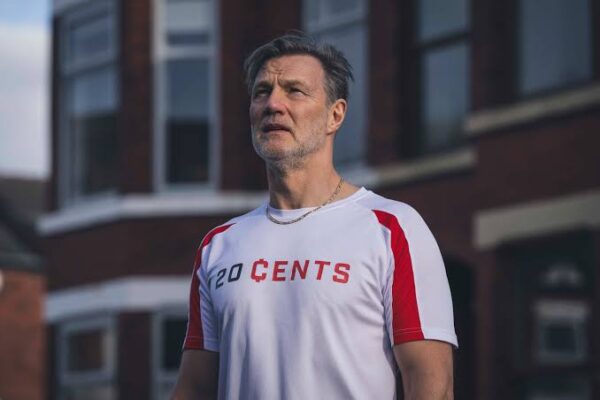
Each week Joe and Terry discuss Starz’s import of Channel 4’s Tip Toe, alternating between our respective sites.
Spoilers follow for Episode 5
Miss a review? Episode 1 / 2 / 3 / 4
JOE
Every episode of Tip Toe starts with a warning, Terry, and, after the premiere, I’ve always brushed it off because we knew the body was Leo and we’ve known that each episode is bringing us one step closer to understanding the events that lead to his lynching.
So in my mind, I was emotionally and mentally prepared for this finale. After all, I’ve seen plenty of upsetting media over the years and I watch horror content all of the time. I’m so desensitized that I’m practically dead inside!
Welp…guess what? I had a full on crying panic attack during episode five of the series (I’m actually tearing up while writing this because I’M STILL SO UPSET). This may be the most affected I’ve been by a series in years, so take a victory lap, Russell T. Davies, because you just destroyed me.
Credit to you, Terry, because you never wavered in your belief that Leo’s (Alan Cumming) murder was at the hands of Clive (David Morrissey) and his footballers. You humoured me last week when I suggested that the Poles were involved (in hindsight, this was clearly a masterful red herring by Davies to throw us off the scent), but no…it was Clive. It was always Clive.
Once the episode ended and I had calmed down, I realized why I didn’t want to accept that Clive was the murderer. Part of it is David Morrissey’s performance: he’s done a fantastic job of making us think that Clive was making incremental growth; that Leo and the queers on Canal street were starting to chip away at his uninformed, archaic, Internet-fuelled beliefs and Clive was becoming a better father, neighbour, and maybe even future ally.
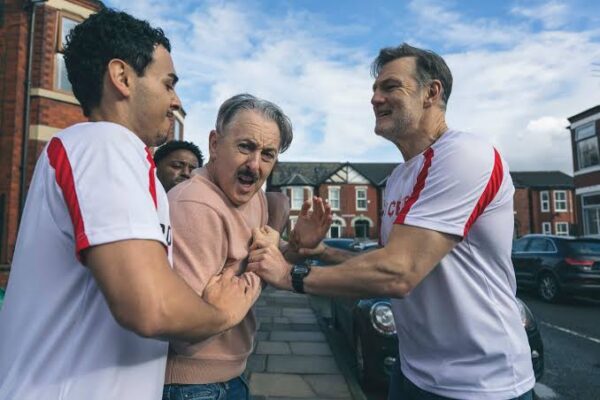
There were even moments during the toxic masculinity football party where George was repeatedly being assaulted by Roddy (George Miller) that I thought Clive was going to step in and defend his youngest. But then he would launch into his performative banter/yell to appease the bunch of hooligans and we’re right back where we started.
As expected, the episode is the equivalent of a vise slowly tightening to the point of explosion. Obviously we know there’s violence, but it’s hard to deny how powerful it is to watch the pieces we knew (and some we simply speculated about) fall into place:
- “Flo” written on George’s (Jackson Connor) back.
- His make-up picture.
- Saul’s (Joseph Evans) OnlyFans.
- Marie (Pooky Quesnel) retiring to the bedroom to block out the sound.
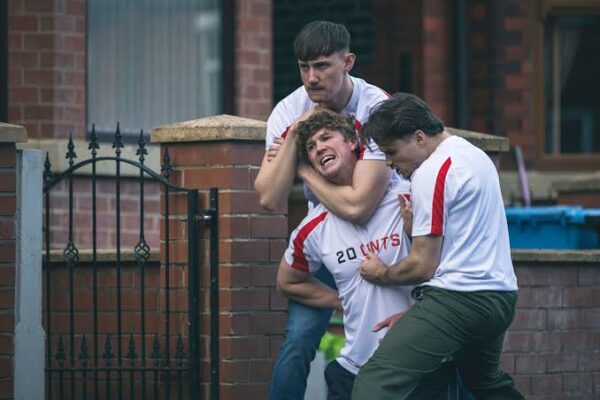
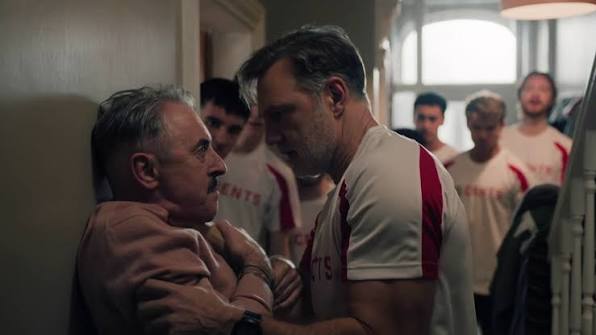
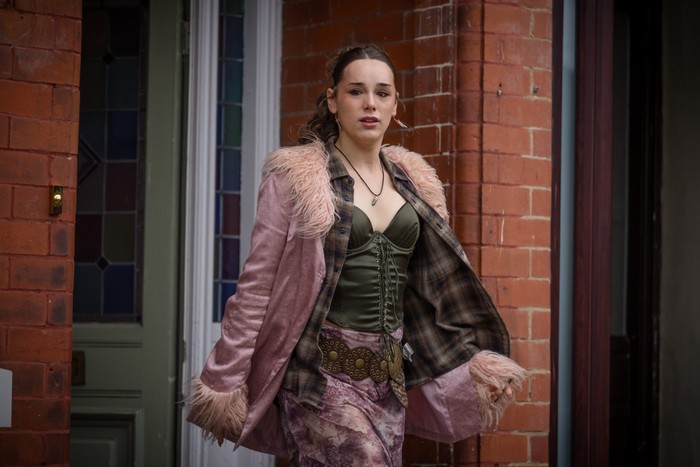
As soon as Zee/Flo (Iz Hesketh) unexpectedly showed up and pressed Leo to check on George, the path to the lynching was clear. Still, the way Leo becomes entangled in Clive’s toxic male performance and how it escalates incrementally – first with insinuations that Leo is watching the boys; then drawing a connection between George and Leo; and the latent homophobia around the speculation that – statistically – one of the lads is a secret queer (which is also true).
It’s a tragedy because there are so many opportunities for someone or something to diffuse the situation, but as we’ve seen across the four previous episodes, one wrong word can ignite the spark and transform someone from a human being to a mere object. If Leo had not suggested that Clive were gay, could this have been avoided? If he had abandoned his attempt to recover his phone and retreated to the safety of his apartment, would they have let Leo go?
It’s redundant to speculate (again, we’ve known this was coming since the opening of the series), but – given the outcome – it’s hard not to speculate if even a small change might have prevented this senseless act.
But I’m spiralling, Terry, because I’m loath to make either of us walk through how the actual act itself occurs. Sadly, this is exactly how I always imagined it would look: a mob, caught in the heat of the moment, loses their humanity and behaves barbarically.
It’s quite another thing, however, to actually see it unfold on your screen; to watch beloved queer icon Alan Cumming pleading for his life before he’s hoisted into the air as young men film/livestream the murder. It’s something to see Clive appropriate the concept of a (celebratory) flag and turn Leo’s body into a symbol of his intolerance and hatred. Hell, even to hear George call Zee/Flo a T-slur or to see the unnamed closeted queer footballer be the one to climb the lamppost to protect his own skin…it’s all so hurtful.
Anyways, I’m tearing up again, so it’s your turn at the wheel, Terry. How did you fare emotionally with the finale? Was there any satisfaction in how valiantly Saul struggled to stop the madness? Did you take solace in any of the post-script text? And how devastating is the final coda that gives Leo the last (ominous) word?
TERRY
After you messaged me about this episode, I found myself not wanting to watch it. I put off watching it for a week in my defence, it’s also festival season). In the cold light of a Saturday morning, I bit the bullet and watched, a pit growing in my stomach the entire time. As little micro aggressions and “boys being boys” slowly built, fuelled by alcohol, testosterone, football and performative (and obviously toxic) masculinity, the pit grew harder. Bigger.
It’s one thing to know how the show is going to end. It’s quite another to watch it unfold in real time.
When the shoe falls…
I had a different experience watching this than you, Joe. I felt…apathetic’s not the right word. Detached? I kept focusing on the little details and the way in which all of the plot threads – from the very first episode, all the way to now – kept getting needled together.
It was only when I started typing my response that it hit me. I think I was in shock.
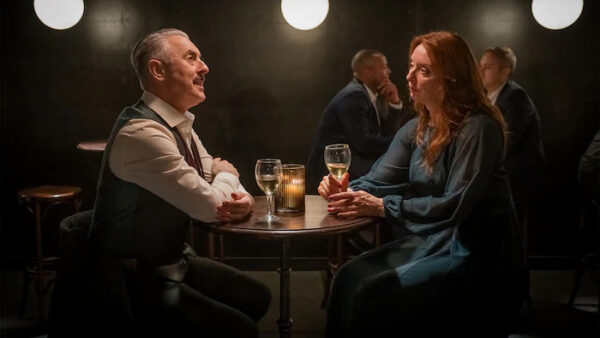
It sounds dramatic, I know. We’ve known it’s coming. It’s a TV series. We’ve watched countless people die in horror films. But I think you hit the nail on the head when you called Alan Cumming a beloved queer icon. I’ve felt that Alan was the perfect choice for Leo from the beginning. His mischievous smile, ability and wit to wryly drop an insult or diffuse a situation is perfect. And those moments where he, too, gives in to the same kind of machismo that the drunk lads embrace; it works because it’s Alan fucking Cumming.
I found myself trying to distract from the horror that I knew was coming. So instead, I focused on the parts that didn’t quite work for me. Like how everyone at the party seemed to have all of the video/photographic proof that these three men are putting on a show. A performance. First it’s the picture of George in makeup. Then it’s a video of him with Zee dancing. Then it’s Saul’s wanking video where the noise he makes when he cums is considered “feminine.” Then it’s Clive being a decent human for once in his life as he holds the hurt drag queen.
It’s one thing immediately after another, from multiple people. It felt too staged. Too writerly. Sitting here, attempting to coalesce my thoughts into something readable, I give it more grace. During last episode’s recap, I mentioned that the ending felt fated. The final coda, set two years prior, solidifies that take. So while I could have qualms about the realism of how that scene went down, it ultimately feels…well, fated.
One thing I did pick up on was a very subtle comment on this kind of performative masculinity. According to Roddy, everyone has seen Saul’s cumming video and know what sound he makes. And between all of the other boys who throw images up on the screen of the Goss men in various “un-masculine” activities, it’s obvious that the group knew, or at the very least suspected, all of these traits/situations. That’s not even including the closetted fan that attempts to kill the gay inside of him by killing Leo. The thing is…no one seems to care. Aside from Roddy and Clive, who both have an inferiority complex, it doesn’t seem as if anything has really changed in the group’s dynamics.
Individually, it seems as if these revelations don’t (or won’t) make a difference. Until they’re together and their masculinity is threatened. At that point, all of these little differences all of a sudden mean more. This is further strengthened by the way in which the men assault each other in sexual jest, take off their shirts, push people’s faces into their bellies, joke about sucking cock, etc. It’s fine here.
But the moment an outsider – a gay man – enters the picture that it becomes a problem.
I don’t even know if this was Davies’ intent because, let’s be honest, while the show is called Tip Toe, its commentary is anything but. Whether it’s Melba (Paul Rhys) waxing more philosophically than is probably realistic about how croissants are the downfall of society – the line “Britain will burn and the city will smell of laminated pastry” is both evocative and unrealistic at the same time – or the conversations between Leo and various other cast members that say the quiet part out loud, Tip Toe’s messaging is never subtle.
I need to join in on your praise of Morissey’s performance, though. As gay men, we know a thing or two about code switching. Together, we might sassily call each other “gurl” or “bitch”, but within a group of straight people (i.e., men) we would never let those words out of our mouth. Because we’ve been taught that that’s not a manly thing.
I remember a time recently where I was talking with my brother and went, “Guuuurl.” It caused a brief pause between us. I’d never said that word that way before in front of him. And while my brother was smiling and unbothered by it, I had the realization that I let out a bit more gay than he’s used to. Not that it bothered my brother; far from it. He’s the best ally a gay brother could want (not least because he could and would beat the shit out of anyone who looked at me cross-eyed). But this is how I’ve operated for 45 years. I have been trained to keep a little distance between myself and straight men, even when it’s someone who’s been there for me since birth.
I bring this non-sequitur up because it’s not just queer people who code shift. Clive does it constantly. He keeps the pain, anger, and doubt to himself. He presents a different version of himself to Saul’s buddies and the outside world that hides those “unmasculine” feelings and thoughts. And Morissey does this brilliantly. The way he goes from the dark side of himself where he watches videos of death in episode one to the happy, jovial and eternally upbeat outer facade is fascinating to watch.
I fear I haven’t answered any of your questions, Joe. At this point, I don’t even know if what I’ve written makes sense. Before I hand it back to you, I do want to briefly talk about the postscript and your question of whether it provided any solace. The short answer is no. Even in this stark messaging, Davies doesn’t let us off the hook. Initially, the first postscript provides some meager sense of justice, explaining that most of the lads got ten years for being an accomplice to murder. That inadequate sentencing stings even before Davies puts the real stinger that, with appeals, they’ll probably only serve 4-5 years.
Let’s be clear: Clive isn’t the only person who killed that man. All of them did. They weren’t “accomplices” to the murder – a term that suggests they were there and didn’t try to stop it. Each and every one of them did it.
The fact the final postscript says that in 18 months a search for Leo’s name will identify him as a paedophile is the gross, rotten cherry on top. There’s no release. No safety. In Tip Toe’s own words, they’ve allowed us to come out of the closet and feel safe just so they can identify us and kill us.
Which is where I’m going to unfairly turn it over to you. What do you make of what Davies is attempting to say with this series? Is it unfairly bleak, or is that ugliness warranted? Do you find any hope in the coda? It certainly seems like only the straight non-mob people get any kind of happy-ish endings. Where have you ultimately fallen on Stephanie (Elizabeth Berrington) and her own micro aggressions? Is she right?
JOE
I appreciate your vulnerability, Terry, because I feel the same way. Code switching is such a curious phenomenon: as queer people (especially ones our age), we’ve perfected how to negotiate different situations and types of people linguistically-speaking to a) keep our sexuality secret (often at work) or b) restrict access to our “lives” as queers (I sometimes think of it like a queer bouncer: if I don’t know or trust people enough, they don’t get access to the full lexicon of quotes/quips/sass).
Looking back on the whole of this limited series, I can’t help but think that Cumming and Morrissey have the responsibility to anchor most everything regarding the narrative, but I’ll confess that it’s Melba and Stephanie that I find myself returning to most often.
I remember finishing the first episode, where Melba had his big monologue about how 2026 is more dangerous because we (ie: queers) were lead to believe that we were in a “post-closet” period and we’ve been lied to. Initially it felt too heavy handed: too on-the-nose; too political; too “writerly” as you said.
And yet, the truth of his statements were undeniable. I feel unsafe in this world and I’m on the top rung of the LGBTQIA+ ladder. I can’t even imagine what the day-to-day life of our trans brethren feels like as their ability to play sports, to access gender-affirming care, to own a driver’s license that actually reflects their authentic self, are all rights that are stripped from them…IN 2026. Meanwhile JK Rowling (AKA She Who Must Not Be Named) boasts about using the profits from a shitty-looking HBO Max remake of Harry Potter to criminalize trans lives.
We may jest (because dark comedy is a coping mechanism), but 2026 is truly THE darkest timeline. I’m not even joking when I “joke” that I fucking hate it here. So, yeah, I bristled when Melba said the quiet part out loud, but I can’t deny the inherent truth of his words.
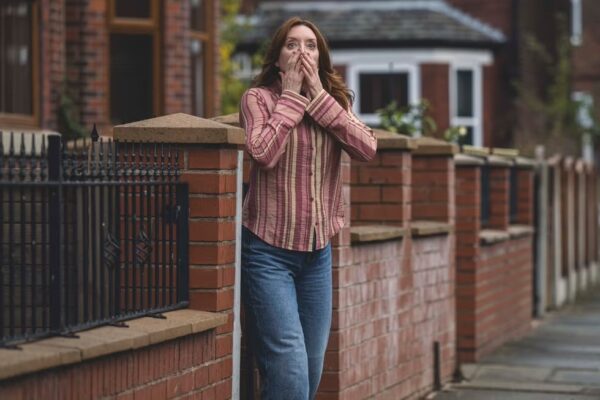
Stephanie, meanwhile, in pointing out Leo’s embedded misogyny while also embodying the kind of (judgmental) anti-queer bias that some allies possess, is similarly fascinating. Sometimes she really gets it right; other times, you want to shake your head and mutter “well, her heart’s in the right place, but…”
To be clear: your criticism of Davies’ “writerly” tendencies are apt (though any series that is entirely written by one person is bound to contain bias). I’ve said in previous reviews that there’s a rage that seethes through Tip Toe because Davies is fucking pissed about so much of this. Melba and Stephanie, as well as Leo, occasionally feel like mouthpieces to get out some of this rhetoric, and while it’s not entirely naturalistic, it’s hard to fault the series for taking a hard line approach.
So what is Davies trying to accomplish? Well, I think this final episode is intended to be a wake-up call. Because I don’t think you’re wrong that in isolation, most of these characters (minus Roddy, who fucking sucks) would have never engaged in this kind of behaviour, but in a group (a mob) it barely takes some sexual jostling, some Internet rhetoric, and some delicate male egos to go from “cheap beer and footie with the lads” to “oopsie, I lynched a gay man.” It’s not a new reaction, but this neanderthal response in a contemporary text is part of why it’s so impactful.
Lately I’ve been watching a lot of 80s and 90s texts that highlight how queer people, and especially gay men, have been stigmatized for decades, particularly since the height of the AIDS crisis. But those have a veneer of history to them; it’s all in the past, they seem to suggest.
But there’s no getting around the contemporary time period of Tip Toe. We can’t handwave away these events with a “well, it’s not like that anymore” commentary. Davies deliberately chose to make this a contemporary series. That allows him to conveniently give everyone easy access to Saul’s OnlyFans and George’s made-up photo, but it also removes any attempts to suggest that these are not modern, contemporary issues.
It sounds silly, but there were so many times watching Tip Toe that I wanted to say “well, it’s not like that anymore”…but that’s simply not true. These are modern problems that have been around for ages, and Davies is actively trying to combat defence mechanisms like mine by confronting my complacency that “these things don’t happen nowadays.” Matthew Shephard and Teena Brandon are in the rearview…except they’re fucking not; their deaths are evergreen so long as there are Clives and Roddys out there.
And that’s terrifying…
So no, there’s no reassurance to be found in the coda. The punishment for these men feels like a joke. The suggestion that George and Saul are both broken is sad. Hell, the fact even someone tangentially involved like Marie (and, to a lesser extent, Stephanie) are impacted by Leo’s death long afterwards should offer some kind of cold comfort. But no.
It’s just kinda awful.
Back to you Terry: can we, in good conscience, recommend this “feel bad” limited series? I’ll admit that I don’t regret watching it, but I don’t know if I can casually encourage anyone to dive in. (Perhaps this is where I check myself and remind everyone that “good” art isn’t responsible for making us feel good or safe. But also: JESUS CHRIST).
Do you begrudge Davies for hammering home his point or is that, in fact, the whole raison d’etre? Finally, do you think this series could work in the US or is there something inherently British about Tip Toe?
My series rating: 4.5/5
TERRY
It’s difficult, right? It’s weird to say I “enjoyed” this show, but I have to admit that it is exceedingly good at doing what it sets out to do…even though some of it is as subtle as a sledgehammer to the face. It feels quintessentially Davies, in that regard. But the further out from watching it, the more I’ve warmed to what it’s doing, Joe.
Tip Toe is furious at how far things have regressed and, honestly, it’s a refreshing reminder that progress never stops. I think a lot of younger queer people do need to watch this show to maybe shock them that a lot of the freedom they have today is only one bad president away from being taken away. In that regard, Tip Toe is necessary even if I rolled my eyes a couple of times at how on-the-nose it is.
I don’t think this could be effectively remade here. I don’t think American television has the balls to be as violently pointed as the show is. I mean, not to be rude or shady, there’s a reason this show was picked up by Starz (I’m sorry, Starz. I love a lot of what you do and a lot of your shows – shout out to Mary & George – but you don’t have the same clout as HBO or Apple TV, etc.) I unfortunately believe this show is too radically queer and angry for a more mainstream American streaming service.
Did I have a good time watching Tip Toe? Weirdly, yes…when I wasn’t watching through my fingers and waiting for the car crash to happen. I can’t give it a full five stars, but I do agree with your rating. I also give it a 4.5.
Next time we write about something, though, let’s make it something a little more light, yeah?
Tip Toe has finishing airing its five episodes on Starz
Leave a Reply