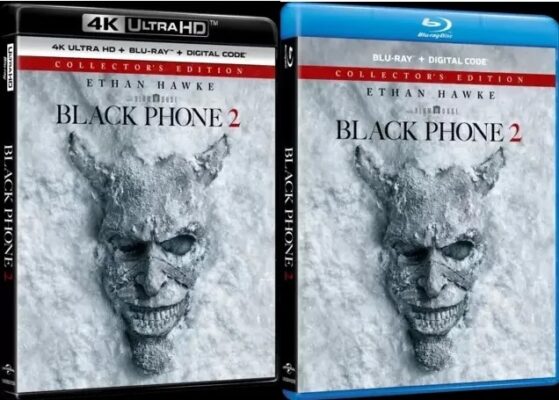
The action jumps ahead four years for Black Phone 2 as siblings Gwen (Madeleine McGraw) and Finn (Mason Thames) battle The Grabber (Ethan Hawke), who has returned from a frozen Hell, at a snowed-in Christian camp.
There’s a solid number of special features on Universal’s 4K release, including 7 minutes of deleted scenes (most is expository scenes, but several feature Arianna Rivas‘ Mustang), and featurettes on: the cast, the new story (inspired by an idea from original author Joe Hill), as well as one on the production (too brief considering how intriguing the water tank and “lake” set sequences are).
Finally, there’s a brand new audio commentary from director Scott Derrickson, who co-wrote the film with writing partner C. Robert Cargill. Here are some of the more intriguing bits from the commentary:
- Actress Anna Lore is a friend of Derrickson and his wife, Maggie Levin and Derrickson praises her ability to pass for a teenager or an adult, as well as her resemblance to McGraw, for helping her to land the part of Hope.
- Heap either praise or blame on Hill for retconning the nature of Gwen and Finn’s mom’s death. Apparently Hill pitched Derrickson on the sequel using the idea that the Grabber (Ethan Hawke) killed Hope. It was enough to lure the writer/director back for the sequel.
- Levin acted as second unit director on the film, which includes all the super 8 footage, the insert work, and the tank work at the end of the film. Derrickson speculates she shot 35 days vs 45 days for first unit (which he acknowledges is “a lot of footage”)
- The graffiti from the Grabber’s basement is based on real graffiti from the 80s, although it isn’t copied directly.
- Derrickson doesn’t believe that Jeremy Davies’ character Terrence (Gwen and Finn’s alcoholic/abusive father) “didn’t deserve to be vilified” after the first film, stressing that in the sequel he’s on a path to redemption.
- My refute: This is arguably one of the most baffling things Derrickson says in the commentary and Terrence’s treatment in Black Phone 2 is definitely one of its least successful elements.
- The poster in Finn’s room for The Thing That Wouldn’t Die is the first horror film Derrickson saw. It really scared him as a kid.
- The studio asked him to cut the wintry car crash Finn observes en route to the camp because it was expensive and timely to shoot. Derrickson argued for its inclusion in order to reinforce how dangerous & deadly the storm was and help the audience experience its menace. “Feel the degree to which the characters are trapped…you’ve experienced it.”
- He compares his son Atticus’s score on the film to the work of Atticus Ross and Trent Reznor.
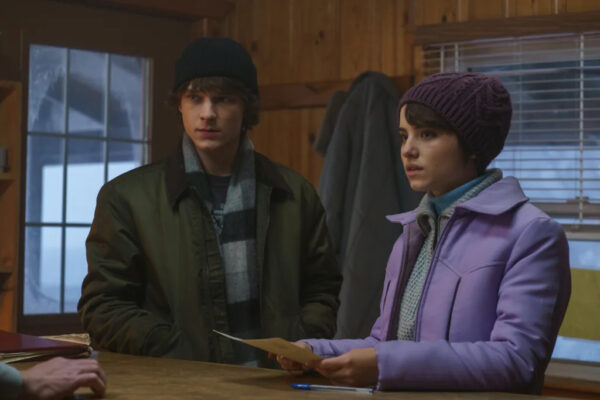
- Of Miguel Mora‘s character, who returns as the brother of a character who died in the first film: ‘He’s more Ernesto than Robin”
- The line “You think it’s hot that I talk to Jesus” apparently always gets the biggest laugh from audiences. Its placement in the film is strategic as a way to release the tension following the scare of Gwen and the ghost boy.
- It was Mora’s decision to give Ernesto a slight stutter; it wasn’t in the script.
- While Derrickson dislikes distilling movies down to a theme, he suggests this film is about how young men process their pain.
- The knuckle tattoos on Mondo were Demián Bichir’s contribution to the character.
- Derrickson talks a great deal about the religious/Christian elements of the film, but stresses that he’s made a film about spirituality that is specific to the characters, specifically Gwen. He is adamant that he didn’t make a pro-religion or a pro-Christian film.
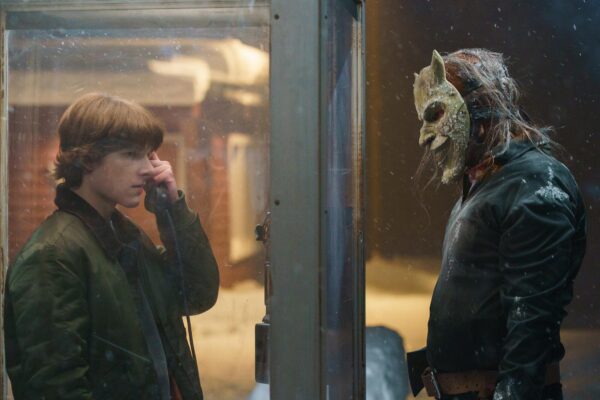
- A good amount of time is spent unpacking the moments leading up to Gwen’s confrontation with the Grabber in the kitchen. As Finn talks on the phone, Derrickson explains how this extended sequence doesn’t feature “forward progress…but [rather] slow mounting dread.”
- The Grabber’s explanation of what he wants here was originally just going to be voice over, but Hawke’s performance was so good/physical that Derrickson had to include the actual footage of it.
- The writer director does name two obvious influences by name (A Nightmare on Elm Street, as well as The Shining), crediting most of the feel of the film to 1982 slasher movies.
- Derrickson also swears that he didn’t think about The Shining until after the script was complete.
- There’s a lengthy discussion about how the church scene – as Mondo connects Hope and The Grabber to the missing boys – is “discovery and backstory, not exposition.” This impassioned defence ends with a justification for this dialogue heavy portion of the film, as Derrickson argues: “That’s something I’ve tried to do my whole career: make my horror films more than just typical horror films…to have characters and emotions and ideas that are less common than what you typically get in a horror film.”
- The studio wanted to cute the brief scene of the Grabber mocking Mondo in his office before a bloody snowman smacks the window, but this scare ranked extremely high in test screenings and, Derrickson argues, helps with the pacing as it falls in between two lengthy scenes of dialogue.
- The Mondo/Finn drug talk scene is “on the nose”, but this is what Mondo does: “he talks to kids.”
- The backgrounds of the lake-set scenes, which feature mountains, are not CGI, but rather photographs of real mountains.
- “There’s a ferocity in his eyes that isn’t Ethan” Derrickson says of the Grabber’s threatening discussion with Gwen in the back of his van.
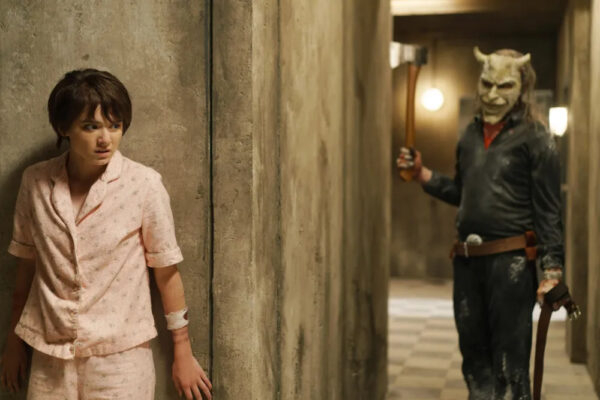
- In the originally version of Gwen’s dream sequence when she seeks refuge from the Grabber in his basement, the boy’s voice on the phone simply said “Hide.” Audiences misheard this as “Hi!” so the whole line – “You have to hide!” – was inserted.
- Of Gwen’s pay phone blood spray: “That doesn’t feel like a horror image that I’ve seen anywhere else”
- McGraw was allowed to do her own stunts as long as the stunt team could guarantee that she would not be hurt. She did most of them, with Derrickson joking that she should become a stuntwoman because she enjoys them more than acting.
- Thamas prepared for an hour before he shot Finn’s tearful breakdown scene, but he did the take without gloves. Derrickson was bereft because the take was so good, so the VFX team digitally added them.
- Yes, the Grabber skating sequence is a direct montage to Curtains.
- The owners of the camp, Barb (Maev Beaty) and Ken (Graham Abbey) aren’t seen after their scalps are cut by the Grabber during the climax, but Derrickson felt the audience didn’t need to know they were ok or that they ultimately apologized to Gwen (this is available as a deleted scene on the disc).
- Derrickson has “no time” (ie: patience) for (underwater) tank work, so that’s all second unit as well.
- Test audiences didn’t feel the Grabber suffered enough in the original ending, which simply involved the ghost kids dragging him into the frozen lake. Derrickson realized after test screenings that audiences wanted catharsis – “they wanted Finn and Gwen to take him down after suffering so much” – so six months after principal photography, the crew reassembled for the film’s sole reshoot: the axe to the head, the face smash and the foot amputation.
Black Phone 2 is now available on 4K, Blu, and Digital